Team |
Lab Director
Biography
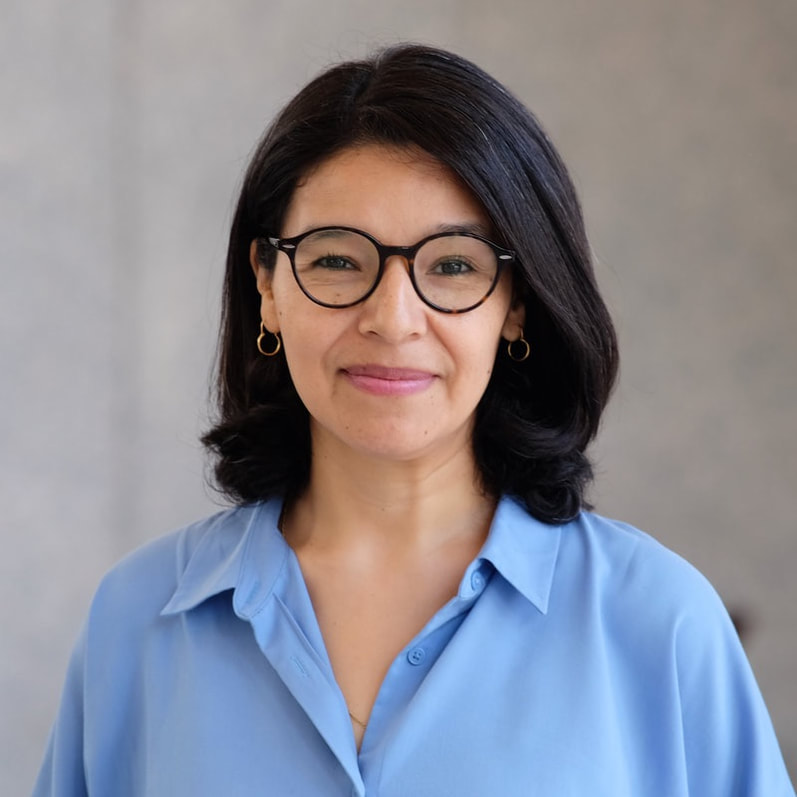
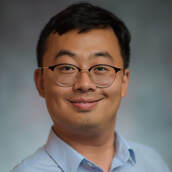
Dr. Mauricio Santillana is Professor of Physics and Electrical and Computer Engineering at Northeastern University, where he directs the Machine Intelligence Group for the Betterment of Health and the Environment (MIGHTE) at the Network Science Institute. He also holds an Adjunct Professor position in the Department of Epidemiology at Harvard T.H. Chan School of Public Health, and courtesy appointments as Professor of Computer Science at Northeastern's Khoury College and Professor of Health Sciences at the Bouvé College of Health Sciences. As a physicist and applied mathematician, Dr. Santillana specializes in scientific computing, mathematical modeling, and machine learning approaches for analyzing complex systems through big data. His groundbreaking work focuses on developing machine learning systems to monitor and forecast infectious disease outbreaks globally using novel data sources including internet searches, social media, and human mobility patterns. He creates predictive models to improve patient outcomes and reduce costs in critical care medicine, while also researching antibiotic resistance patterns using climate variables. Additionally, his expertise extends to modeling atmospheric chemistry, coastal flooding due to hurricanes, and population growth patterns. Dr. Santillana earned his Ph.D. in Computational and Applied Mathematics from the University of Texas at Austin (2008), following an M.S. in the same field (2003) and a B.S. in Physics with highest honors from Universidad Nacional Autónoma de México (2001). His postdoctoral training includes fellowships at Harvard University's Center for the Environment and School of Engineering and Applied Sciences (2008-2010) and Harvard Medical School's Computational Health Informatics Program (2014-2016). Prior to joining Northeastern in 2022, Dr. Santillana served as a tenure-track faculty member at Harvard Medical School and Boston Children's Hospital, where he directed the Machine Intelligence Lab. He also received two Harvard University Teaching Excellence "Bok" Awards (2012, 2014) during his time as a lecturer in applied mathematics at Harvard J.A. Paulson School of Engineering and Applied Sciences. Dr. Santillana's research has been published in over 100 peer-reviewed articles in prestigious journals including Science, Nature, PNAS, Science Advances, and Nature Communications. His work has attracted over $27 million in competitive funding from institutions including the CDC, NIH, NSF, and various foundations including the Bill and Melinda Gates Foundation and Johnson and Johnson Foundation. Dr. Santillana has been consistently recognized among the "World's Top 2%" scientists by Stanford University (2020-2024) and, as one of the principal investigators of the CHIP 50 (Civic Health and Institutions) project, was awarded the 2025 Mitofsky Innovators Award by the American Association for Public Opinion Research for his collaborative work on COVID-19 surveillance. Dr. Santillana currently serves as Co-PI for the CDC's Center for Forecasting and Outbreak Analytics' "Epistorm" project, a $17.5 million initiative developing advanced epidemic analytics and predictive modeling technology. He has advised the US CDC, Africa CDC, and the White House on developing population-wide disease forecasting tools, particularly during the COVID-19 pandemic. His research has been featured in major media outlets including The New York Times, The Washington Post, The Atlantic, The Wall Street Journal, CNN, Fox, and BBC, establishing him as a leading voice in computational epidemiology and public health informatics. |
|
Team Members
Faculty
Biography
In the pursuit of innovative solutions to some of the world's most pressing health challenges, my research revolves around constructing advanced statistical models for predicting infection outbreaks. My PhD and post-doctoral research focused primarily on understanding the evolution of epidemic and pandemic viruses. Currently, these models are tailored to forecast Dengue outbreaks in tropical countries and Influenza outbreaks in the US. My work is not just theoretical; along with the team in the Santillana lab, the Dengue forecasts I produce play a crucial role in supporting clinical trial programs conducted by Johnson and Johnson. Similarly, the Influenza models I've helped to develop are instrumental in contributing to the CDC's Flusight project. The complexities of this research demand a multifaceted approach. I employ a diverse range of methods, bridging the domains of machine learning, infectious disease epidemiology, and time series forecasting. I use classic time series and multivariate methods as well as both custom-produced supervised and unsupervised learning techniques. Subsequent stages involve error analysis and the visualization of our findings. Collaboration is central to the success of these projects. I routinely interact with both governmental and non-governmental stakeholders. In addition, I am a physician and routinely communicate with clinical teams regarding the application of public health data to clinical problems. |
Biography
|
Postdoctoral Fellows
|
Biography
Dr. Binod Pant earned his PhD in Applied Mathematics at the University of Maryland, College Park (UMD), where his research focused on the intersection of mathematics and biology. His work involves utilizing mathematical theory (e.g., bifurcation and asymptotic analyses), data analytics, and computational methods to gain insight into the transmission dynamics and control of emerging and re‑emerging infectious diseases of public health importance. Among other research areas, Dr. Pant's ongoing work focuses on (a) analyzing human behavior data and incorporating behavior change data into mathematical models, (b) uncertainty quantification of epidemiological models, and (c) using mechanistic models to gain mathematical insight into the transgenic fungus's ability to control malaria mosquitoes. Dr. Pant is an elected Co‑Chair of the Mathematical Epidemiology subgroup (MEPI) of the Society of Mathematical Biology (SMB) and a steering committee member for the Models of Infectious Disease Agent Study (MIDAS). |
Biography
Dr. Dewey is an incoming postdoc with the MIGHTE group. He completed my PhD in Epidemiology at UCLA, using network methods to assess questions from behavioral science, public health, and scientometrics. He hopes to use his background in network science and epidemiology to complement the ongoing outbreak forecasting efforts using non-traditional data. He’s also interested in the collection of high-quality data that could be used as a platform for future network research. |
Biography
|
Biography
I am a Postdoctoral Fellow at the Broad Institute of MIT/Harvard in the Eric and Wendy Schmidt Center. I am broadly interested in intersections of machine learning, dynamical systems, and biomedical sciences. My work focuses on improving the prediction and inference of biological and physical systems by blending machine learning, mechanistic modeling, and data assimilation techniques. I studied biophysics as an undergraduate at Columbia University, and did a PhD in Computing and Mathematical Sciences at Caltech under the supervision of Andrew Stuart. Outside of work, I enjoy playing music, going to concerts, playing tennis, skiing, and camping. |
Biography
|
PhD Students
|
Biography
Raúl is a second-year Physics PhD student working with Professor Mauricio Santillana. He is interested in the application of physics and mathematical modeling in the study of epidemics and human behavior. Prior to joining NetSI, he received a B.S. in Physics and a minor in Applied Mathematics from Purdue Univeristy Northwest. |
Biography
Xiyu is an incoming PhD student in Network Science. She graduated from Harvard Data Science Master’s program in 2023 and started working with Prof. Mauricio Santillana as a research assistant. Her research project was about transforming disease images into low-dimensional vector embeddings. During her PhD, she would like to cultivate her research interests in graph machine learning and computer vision with an application in medicine. Outside work, she loves practicing yoga and pilates, bouldering, reading books, and spending time with her cats. |
Biography
Daniel is a first-year Ph.D. student in Network Science. He has a background in Engineering Physics from the Autonomous University of Ciudad Juarez, in Mexico, where he worked on modeling evolutionary processes of pathogens using stochastic models for his undergraduate thesis. His research interests include developing mathematical and computational models that integrate complex sociotechnical structures with the evolutionary nature of pathogens to better understand the effects of evolution on the emergence and prevalence of epidemic outbreaks. In his free time, Daniel is an enthusiast of specialty coffee and competitive video games. |
Biography
I am a machine learning researcher with multiple projects working on applying machine learning methods to time series forecasting. Some of my past works involved designing methods for epidemic tracking and prediction in diseases such as influenza, dengue, and COVID-19, in collaboration with Professor Mauricio Santillana. Last year I helped run the MIGHTE Group’s contribution to the CDC’s flu modeling prediction initiative, including designing the overall ensemble methodology. This led to a very strong result, placing among 2nd or 3rd in many tasks. At Northeastern University I will continue developing our methods for influenza forecasting, with a par1cular interest in improving real-time prediction of hospitalizations at the state level across the United States. In addition, I will conduct research on developing new techniques for multiple time series modeling with network interactions, extending state-of-the-art approaches such as vector autoregression and gradient boosting. Another aspect that will be of interest is speeding up the training and validation of sequential models using parallelization and novel optimization methods. |
Co-op Students
|
Biography
Imogen is an undergraduate student at Northeastern University (’27) pursuing a degree in Data Science and Public Health through the Khoury School of Computer Sciences and the Bouvé College of Health Sciences. She is interested in applying machine learning and dynamical systems to public health, with a focus on tracking and predicting disease outbreaks, understanding the impacts of climate change on disease spread, and hospital decision-making. During her co-op, she plans to explore innovative machine learning solutions to advance public health. Outside of academics, she enjoys playing music, field hockey, and skiing. |
|
Undergraduate Research Assistants
|
Biography
Yash R. Bhora is an undergraduate Physics & Data Science major at Northeastern University with aspirations for graduate study in Computational Physics. Born in India and raised in Thailand, Yash's interests lie in using computers to understand physical phenomena around us. His work with the MIGHTE lab involves understanding the coarsening effects of the SIR compartmental model for infectious diseases. Outside of this, he enjoys hip hop and breaking. |
|
Affiliate Members
|
|
Alumni
|
Yuval Barak-Corren M.D Technion Rappaport Faculty of Medicine.
Team member 2018-2020 Now: Researcher at Boston Children's Hospital Emily Aiken, B.S. Computer Science, Harvard University Team member: 2018 - 2019 Now: PhD student, University of California, Berkeley Mohammad W. Hattab, Ph.D. Biostatistics, Wyss Institute, Harvard University. Team member: 2018 - 2019 Now: Researcher at Harvard Medical School Sarah McGough, PhD, Candidate Global Health, Harvard School of Public Health Team member: 2016 - 2019 Now: Data Scientist at Genentech Gal Koplewitz, B.S. Computer Science, Harvard University Team member: 2018 - 2019 Now: Data Scientist, Quantum Black; and Independent Scientific Writer, (The Economist, New Yorker, etc) Karla Mejía, M.S. in Global Health, Harvard School of Public Health Team member: 2018 - 2019 Now: Associate Staff, MIT Lincoln Laboratory David Castiñeira, PhD. Chemical Engineering, Postdoctoral Fellow, Massachusetts Institute of Technology Team member: 2016 - 2017 Now: Principal Advisor for Emerging Technologies, Hess Corporation Gaston Fiore, M.S. Computer Science, Massachusetts Institute of Technology Team member: 2016 - 2017 Now: Entrepreneur Kaycie Schlosser, Medical Doctor, Chief Fellow, Boston Children's Hospital Team member: 2016 - 2017 Now: Pediatric Intensivist, Columbia University Irving Medical Center Gal Wachtel, B.S. Molecular & Cellular Biology, Harvard University Team member: 2017 Now: Data Scientist, Palantir Sam Tideman, M.S. Epidemiology, Harvard School of Public Health Team member: 2017 Now: Data Scientist, Northshore University Healthsystem Nick Generous, M.S. Epidemiology, Harvard School of Public Health Team member: 2017 Now: Scientist, Los Alamos National Laboratory Suqin Hou, M.S. Biostatistics, Harvard School of Public Health Team member: 2016 Now: Data Scientist, KAYAK Andre Nguyen, B.S. Applied Math, Harvard University Team member: 2014 - 2016 Now: Director of Machine Learning, JURA Bio, Inc. |